Year 5 · Mental multiplication — round and adjust
How to multiply by 99 in your head (and the mistake to expect)
Picture a Year 5 child at the kitchen table with 6 × 99. They think for a moment, look quietly pleased, and write 599. In many classrooms that gets a “wrong, try again” — and not much else.
Here is the whole trick in one sentence: round 99 up to 100, multiply — 6 × 100 = 600 — then take away one whole group of 6, not 1. The right answer is 594. And 599 is what happens when a good strategy goes one small step astray.
Why 599 is a smart mistake
If your child writes 599, something is going right. They have spotted that 99 sits next door to 100 — that is real number sense, and it is the beginning of the rounding-and-adjusting strategies taught in Year 5. Their logic was clean: 99 is “100 minus 1”, so they took 1 off the final answer. The multiplication was perfect. The slip lives entirely in the last move — they adjusted by 1 when they should have adjusted by one 1 per group.
The picture that untangles it
Step one — make a friendlier sum. 99 is awkward, so swap it for 100. Now the sum is 6 × 100 = 600, which most Year 5 children can do with a smile.
Step two — spot what we added. Imagine six boxes, each holding 99 apples. To make counting easy we sneak one extra apple into every box, so each holds exactly 100. That gives us 600 apples — but we put six of those in ourselves, one per box.
Step three — take it back. Six borrowed apples have to come back out: 600 − 6 = 594.
The apple boxes matter more than the rule. Once a child can see the six extra ones sitting in the boxes, “adjust by the whole group” stops being a rule to remember and becomes something obvious.
What to say tonight
- “Good spot — 99 really is nearly 100.”
- “How many extra ones did we sneak in?”
- “So what do we take back off?”
Each phrase confirms the strategy was right before nudging at the slip — guidance without giving the answer away.
How SmartMaths handles it
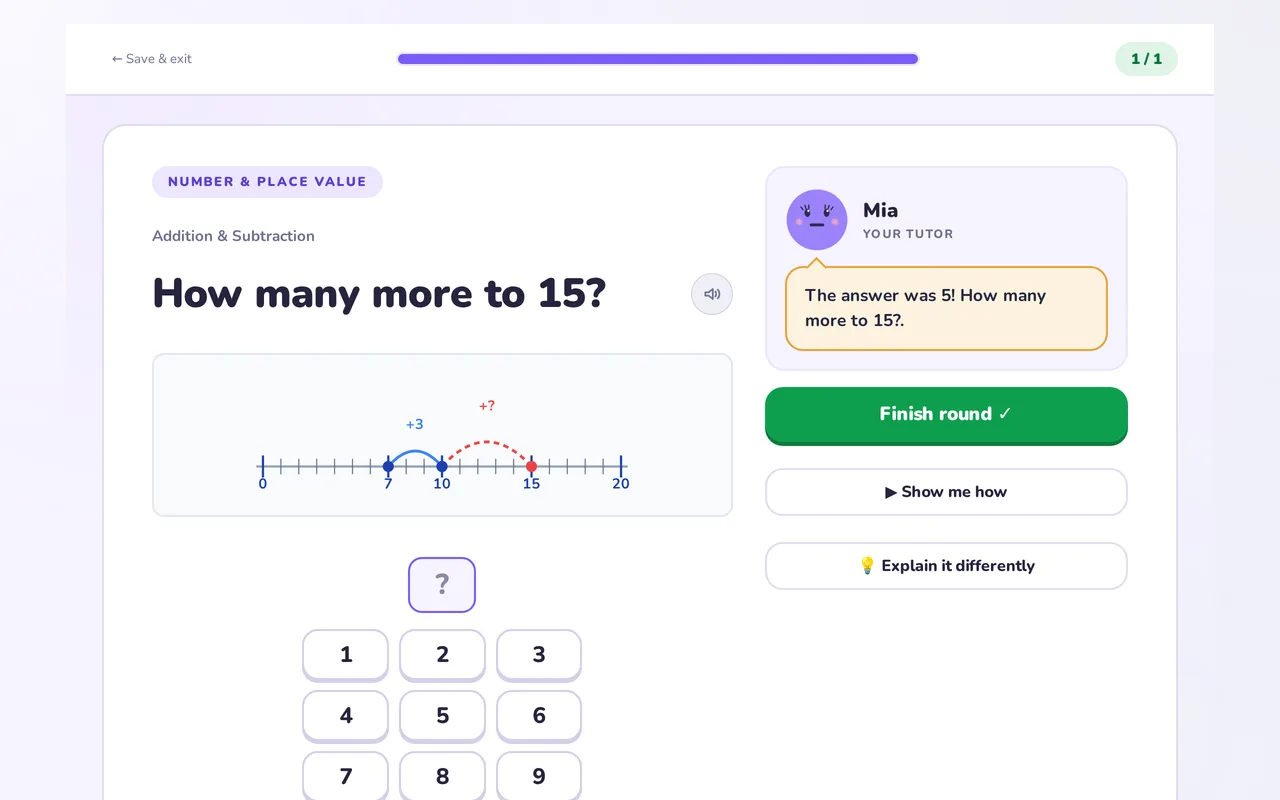
When a child gets a question wrong in SmartMaths, the app does not just mark it wrong. A “Show me how” walkthrough replays the method one calm step at a time — deliberately on a second example rather than the child’s own, so they still get to finish theirs.
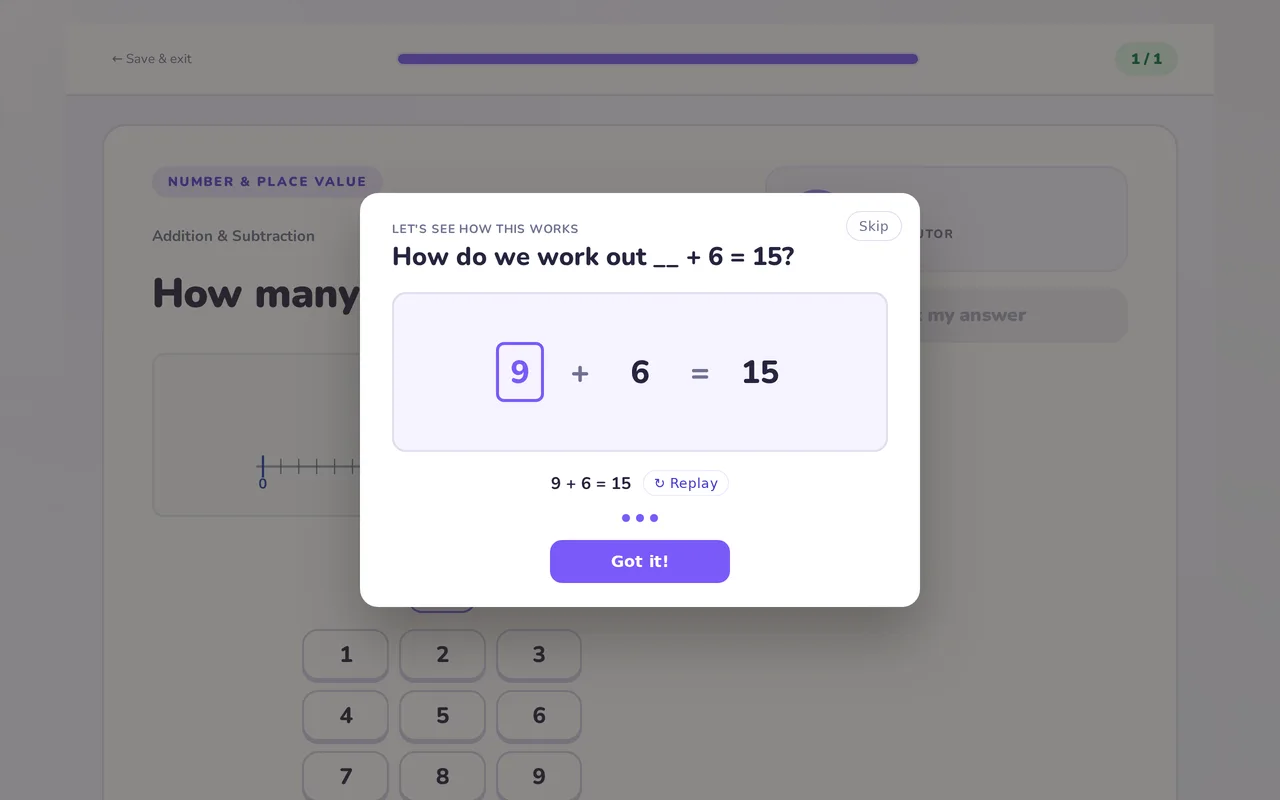
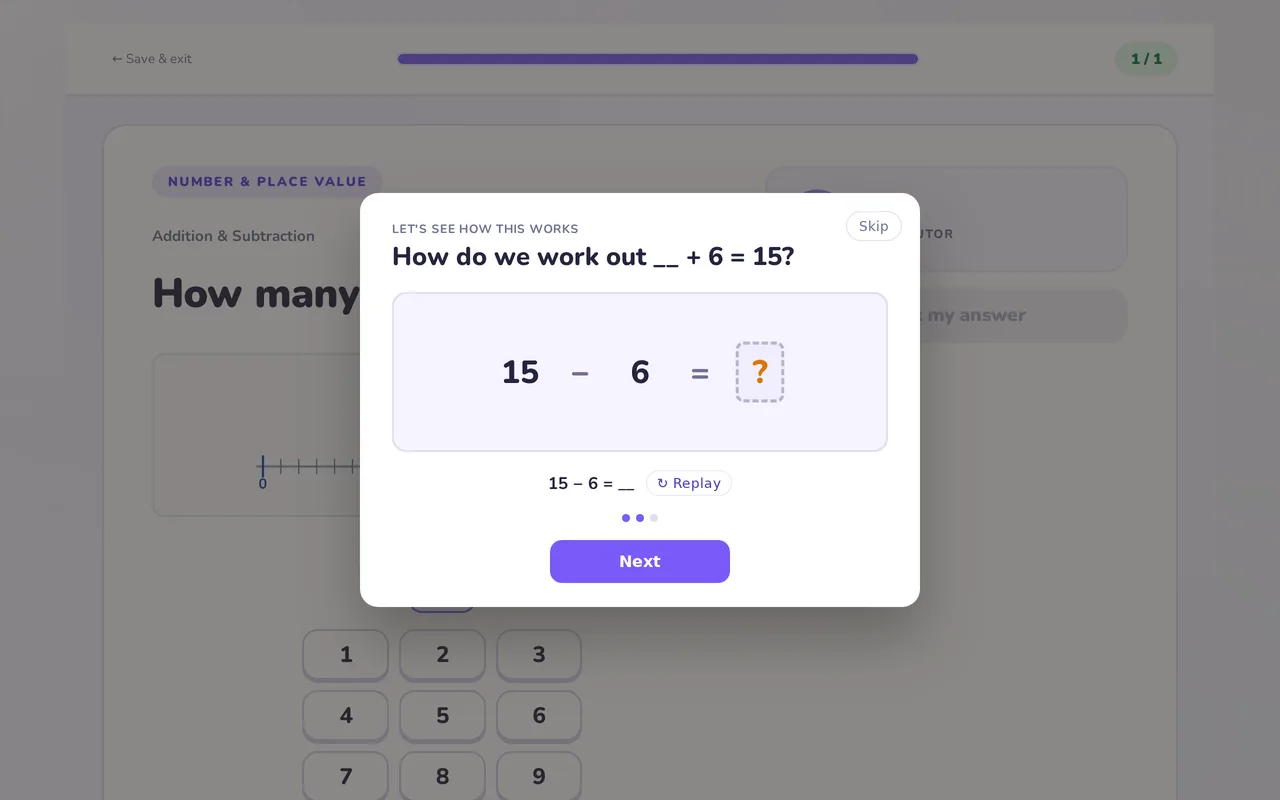
If it has not landed, “Explain it differently” re-teaches the same question another way — a number line, a bar model, a quick sketch — until one of them clicks. Every walkthrough is pre-built and checked by a human, and the Year 5 bank alone holds over 900 expert-reviewed questions (over 5,000 across Years 1 to 6), with wrong answers labelled by the mix-up behind them. The rest of the year is on our Year 5 maths practice page.
SmartMaths is very affordable tutor-style maths at home — it explains mistakes the way a tutor would; free trial at smartmaths.ai.
Common questions
Why does my child write 599 for 6 × 99?
They are using a smart round-and-adjust instinct: 99 became 100, but they subtracted 1 instead of the whole group of 6. It is a common slip and a positive sign — their brain is hunting for shortcuts, which is what confident mathematicians do.
What is “round and adjust” in maths?
A mental strategy taught in upper primary: nudge an awkward number to a friendly one (99 → 100), do the easy sum, then correct for the nudge. The correction must account for every group — that is the step children miss.
Is it cheating to round when multiplying?
Not at all. Rounding then adjusting is explicitly taught in Years 5 and 6 and shows strong number sense. The answer is exact — only the route is a shortcut.