Year 2 · Fractions — comparing halves and quarters
Why does my child think a quarter is bigger than a half?
It is a common scene at the kitchen table. You are sharing a sandwich or a small pizza, you ask your child which piece they would like, and they point at the quarter — “because four is more than two”.
The one-sentence answer: cutting the same shape into more pieces makes each piece smaller, so a quarter is smaller than a half. And the mix-up happens because your child is applying the most reliable rule they own — four beats two — to the one place in maths where it flips.
Why the mistake is smart
Researchers call this “whole number bias”, and it is a sign of a logical mind, not a struggling one. For their entire maths life so far, 4 has beaten 2 — four apples beat two apples, four fingers beat two fingers. They spent Year 1 proving it on their hands.
When fractions arrive, they simply apply the rule they trust to a new situation that happens to work the other way round. They are not failing to understand. They are correctly using what they know, one step before discovering the exception.
The fix — the picture that untangles it
Show the why rather than telling the rule. This is the same walkthrough the SmartMaths “Show me how” demo animates on screen, and you can do it at home with paper or a sandwich.
Step one — cut the shape into halves. One shape, two equal pieces. Each piece is a half, and because the whole is shared only two ways, each piece stays big.
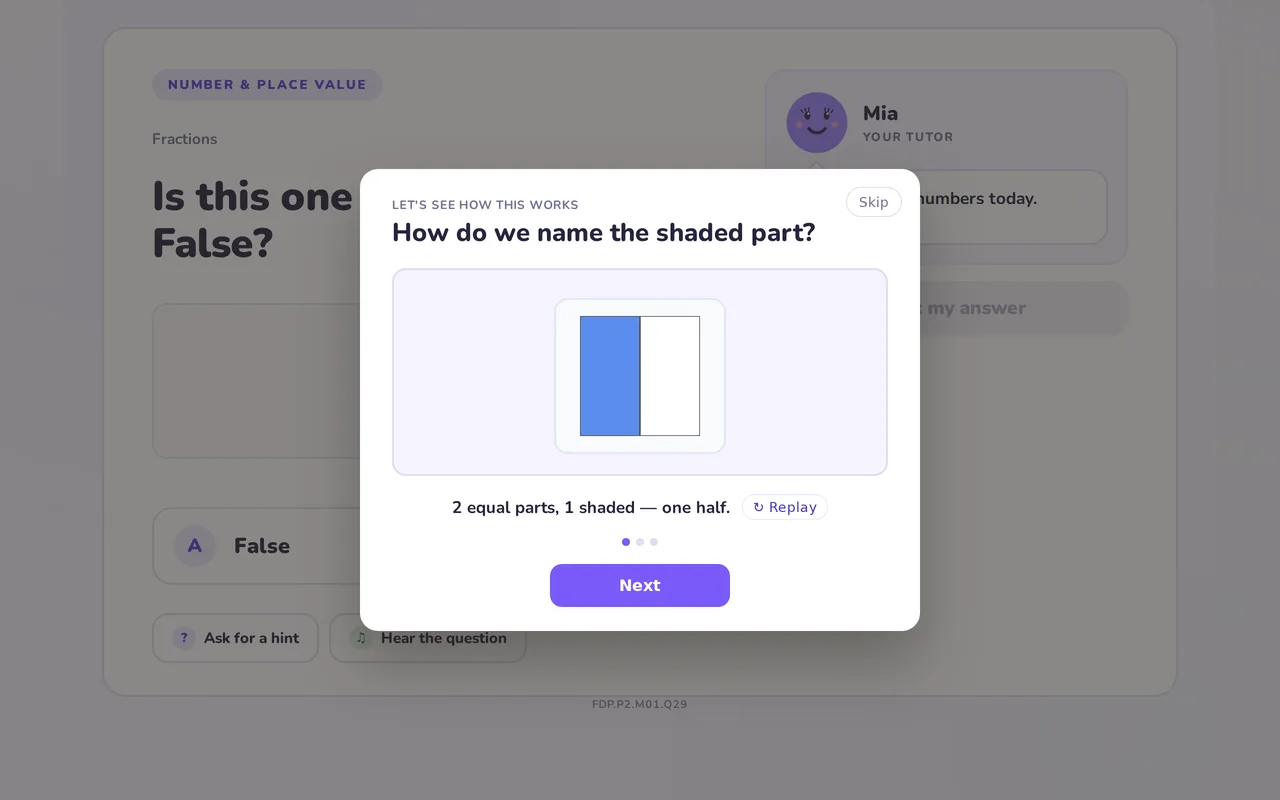
Step two — cut the same shape into quarters. An identical shape, four equal pieces. Same amount of food, more people sharing it. Your child watches each piece shrink — and sees that the 4 in a quarter counts the pieces, it does not measure them.
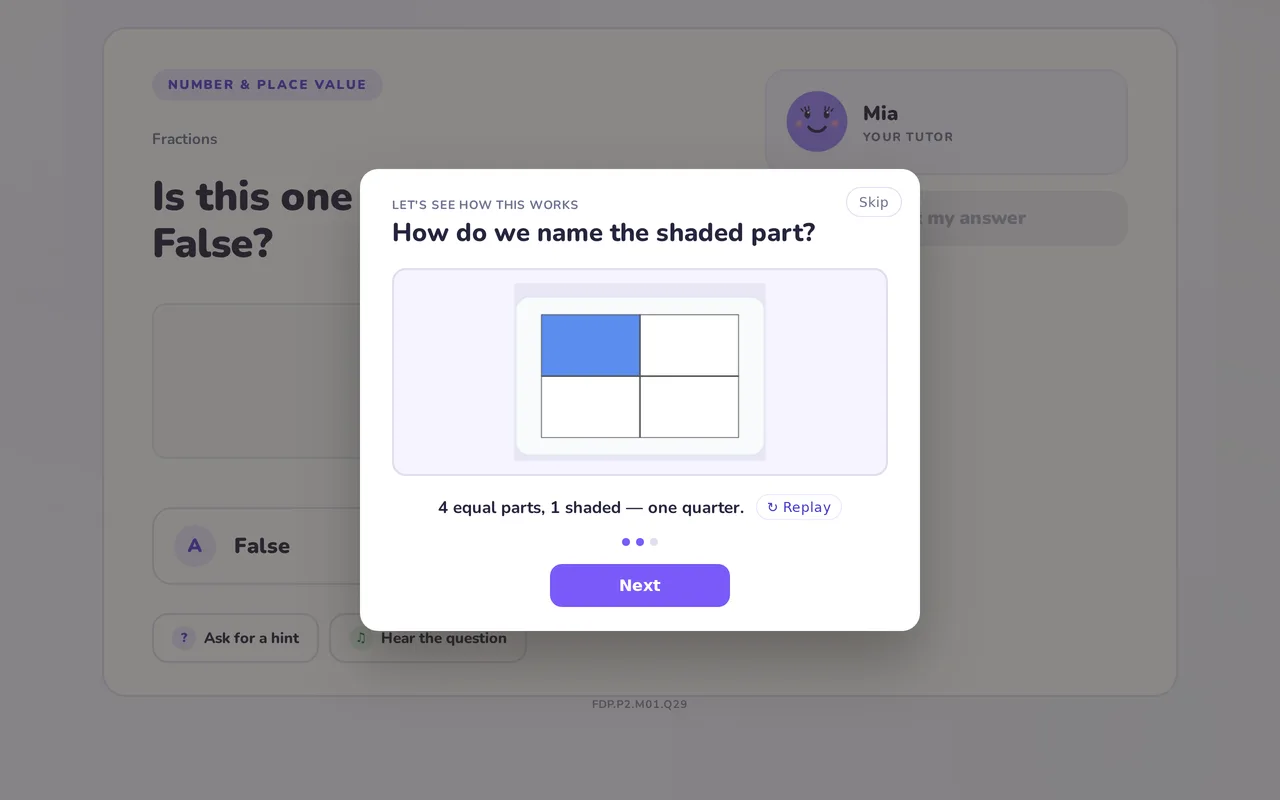
Step three — put them side by side. One half next to one quarter, same shape behind both. The half is plainly bigger. More pieces means smaller pieces — said while they are looking straight at it.
What to say tonight
- “Shall we cut this sandwich and check — halves first, then quarters?”
- “If you were really hungry, would you rather have one piece of two, or one piece of four?”
- “Does the bigger number on the bottom mean bigger pieces — or more pieces?”
Each question lets them discover the flip themselves, which beats being told.
How SmartMaths handles it
When a child picks the quarter as bigger in SmartMaths, the app does not just mark it wrong. A “Show me how” walkthrough cuts the shape on screen, step by step, the way a tutor would explain it — calm, narrated, and paced for the child. Across Years 1 and 2 alone there are more than 200 expert-reviewed fraction questions (over 5,000 questions across Years 1 to 6), and you can see how we support the Year 2 milestones on our Year 2 maths practice page.
SmartMaths is very affordable tutor-style maths at home — it explains mistakes the way a tutor would; free trial at smartmaths.ai.
Common questions
Why does my child think a quarter is bigger than a half?
It is the “whole number bias”: they know 4 is greater than 2 and apply that to fractions, where a bigger bottom number actually means the whole was cut into more, smaller parts. It is one of the most common — and most fixable — fraction hurdles.
When do children learn halves and quarters at school?
Sharing into equal parts starts in Year 1; halves and quarters become a major focus in Year 2, first in shapes and then as fractions of small amounts.
How do I explain fractions with food?
Food works because the “whole” is obvious and the sharing is real. Cut the same item into two, then four, and let your child see that more people sharing means smaller pieces for everyone.